Water & Waste Water Treatment Solutions

Zero Liquid Discharge (ZLD) & Thermal Evaporation Systems

Heavy-duty thermal concentration and drying infrastructure designed to eliminate liquid waste entirely, recover pure condensate, and crystallize solid salts.
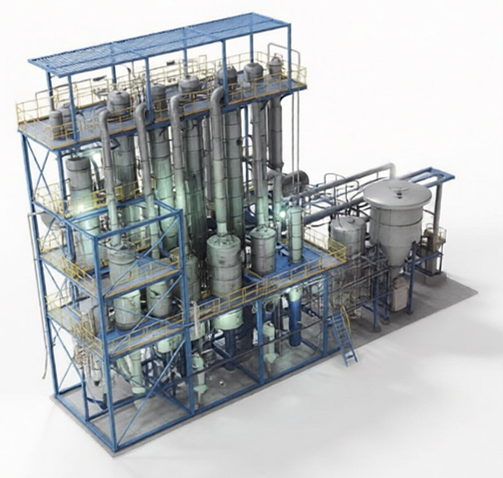
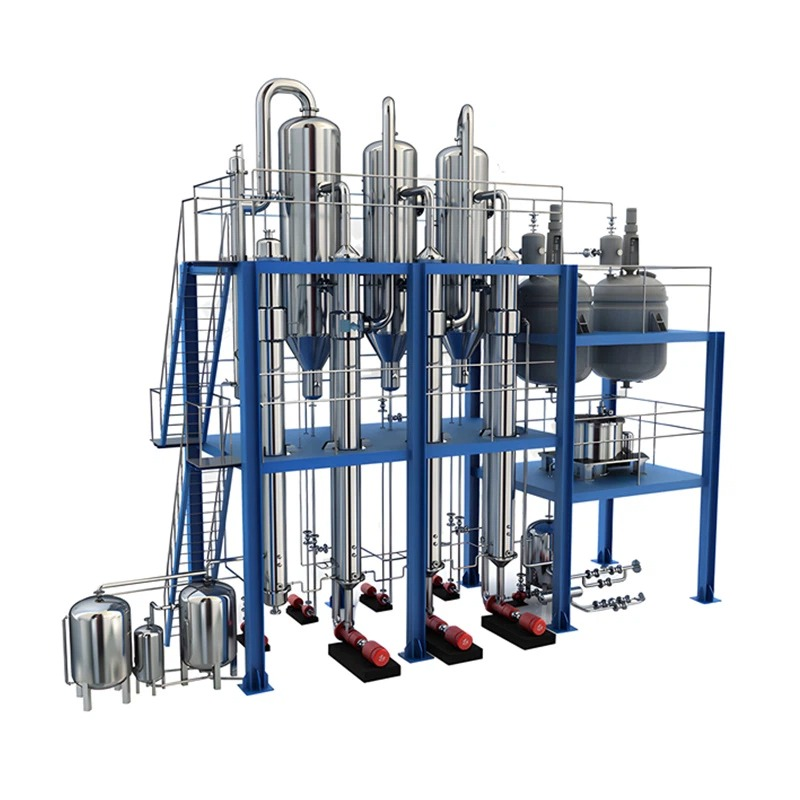
Multiple Effect Evaporator (MEE)

Energy-Efficient Thermal Evaporation for Industrial Wastewater & ZLD Applications

Detailed Specifications

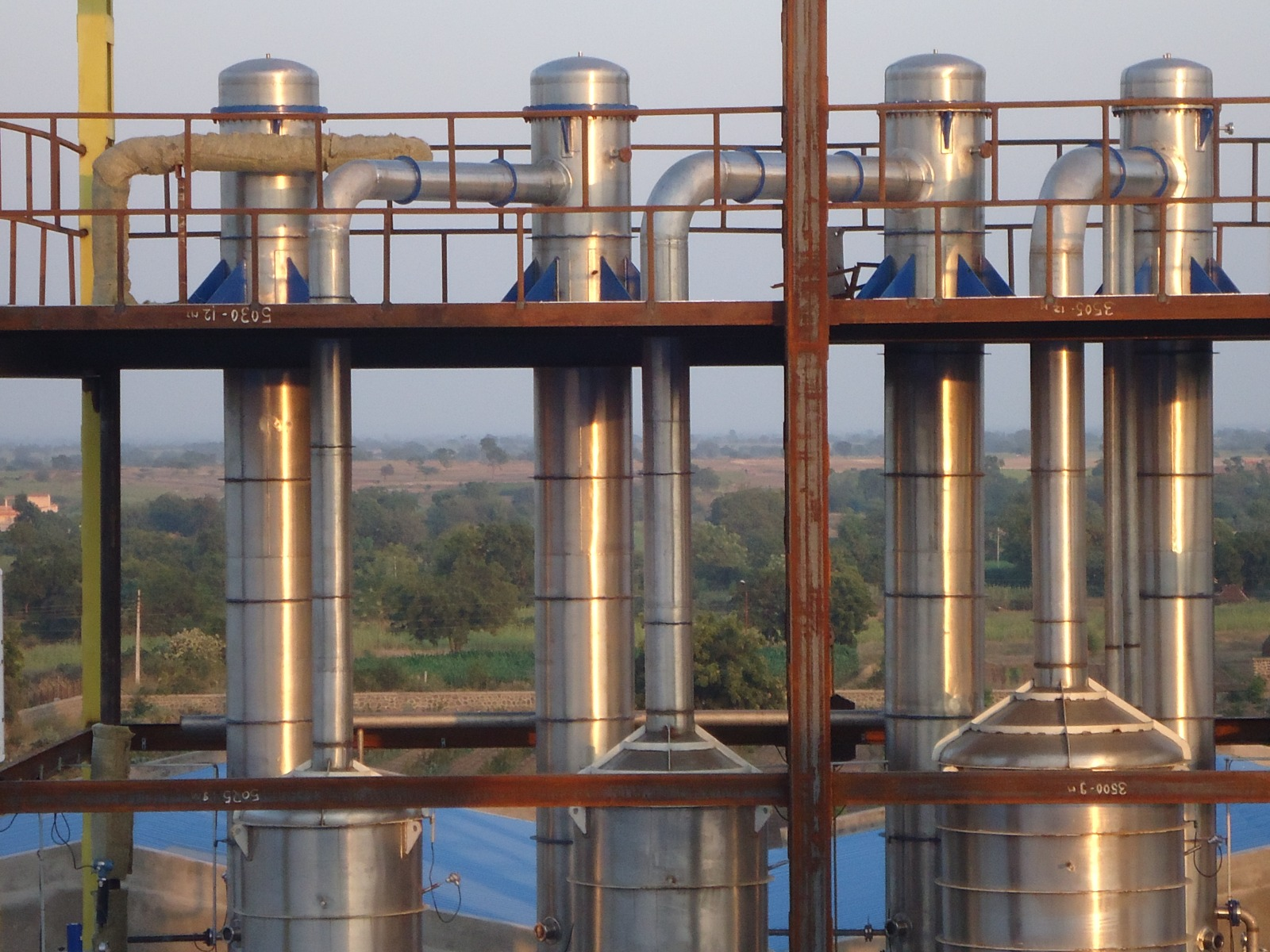
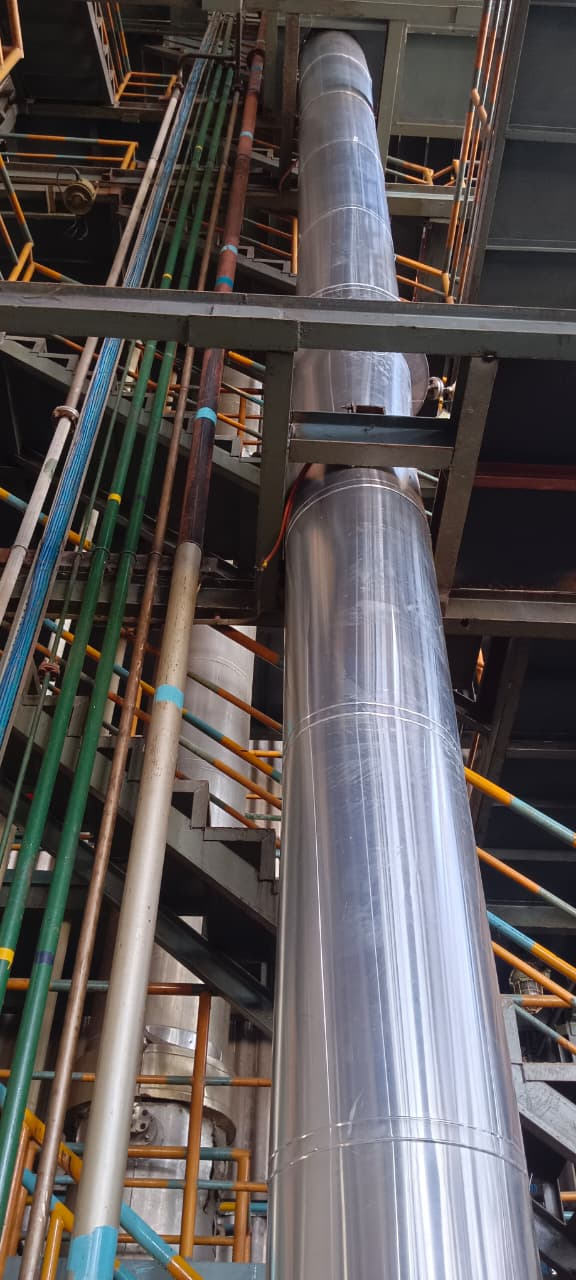
Multiple Effect Evaporator (MEE) Systems for the concentration and volume reduction of high-TDS wastewater, RO reject, process effluent and other difficult-to-treat industrial streams. MEE systems use multiple evaporation effects operating at progressively lower pressures and temperatures, allowing vapour generated in one effect to be reused as the heating medium for the next effect. This enables efficient utilization of thermal energy compared with single-effect evaporation. MEE systems are widely used as part of Zero Liquid Discharge (ZLD), wastewater concentration and water-recovery systems.

The feed is introduced into the evaporation system and heated under controlled operating conditions. In a multiple-effect arrangement, vapour generated from one evaporation effect is reused to provide heating to the subsequent effect. Each successive effect generally operates at a lower pressure and corresponding boiling temperature. This cascading utilization of vapour reduces the external steam requirement and improves overall thermal efficiency.
 

  • Suitable for high-TDS and difficult-to-treat wastewater
  • Multiple-effect thermal evaporation
  • Improved steam economy compared with single-effect evaporation
  • Suitable for RO reject concentration
  • Reduced wastewater volume
  • Suitable for ZLD applications
  • Automatic or semi-automatic operation options
  • Customized evaporator configurations
  • Integration with solvent stripper where required
  • Suitable for industrial wastewater recycling systems
  • Significant reduction in liquid waste volume
  • Suitable for high-TDS wastewater
  • Improved thermal efficiency through vapour reuse
  • Supports ZLD implementation
  • Concentrates dissolved salts and contaminants
  • Enables recovery and reuse of condensate
  • Can be integrated with RO and crystallization systems
  • Customized for industry-specific wastewater

Mechanical Vapor Recompression (MVR) System

Energy-Efficient Evaporation for High-TDS Wastewater & ZLD Applications

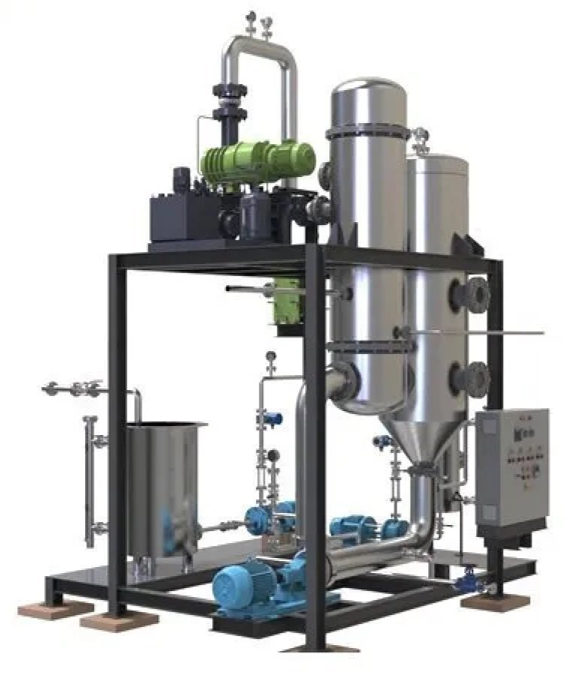
Mechanical Vapor Recompression (MVR) Evaporation Systems for the concentration and volume reduction of high-TDS wastewater, RO reject, process effluent and other challenging industrial streams. MVR technology uses a mechanical compressor or blower to recompress the generated secondary vapour, increasing its pressure and saturation temperature so that it can be reused as the heating medium within the evaporator. By recycling the vapour within the evaporation process, MVR can significantly reduce the requirement for continuous external steam compared with conventional evaporation systems.

The feed enters the evaporator and is heated under controlled vacuum or low-pressure conditions. As water evaporates, the generated secondary vapour is directed to the Mechanical Vapor Recompressor (MVR). The compressor increases the vapour pressure and temperature.

The recompressed vapour is then returned to the heat-transfer section of the evaporator, where it provides the energy required to evaporate additional water.
    • High thermal efficiency
    • Reduced external steam requirement
    • Continuous vapour recycling
    • Suitable for high-TDS wastewater
    • Compact evaporation system
    • Suitable for RO reject concentration
    • Reduced wastewater volume
    • Automated operation options
    • Suitable for integration with ZLD systems
    • Customized design based on process requirements
    • Lower dependence on fresh steam
    • Efficient reuse of generated vapour
    • Reduced liquid waste volume
    • Suitable for high-TDS and difficult wastewater
    • Supports water recovery and ZLD
    • Compact process configuration
    • Continuous operation
    • Can be integrated with RO and crystallization systems
    • Potentially lower operating energy requirements depending on site conditions
    •  

Agitated Thin Film Dryer (ATFD) System

Efficient Drying & Solid Recovery for High-TDS Wastewater and ZLD Applications

Detailed Specifications

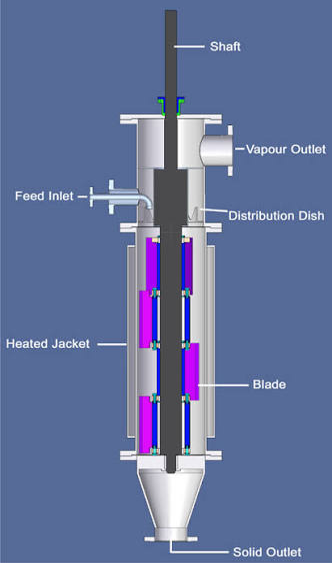
Agitated Thin Film Dryer (ATFD) systems for the thermal drying and solidification of concentrated wastewater streams generated in Zero Liquid Discharge (ZLD) and industrial wastewater treatment systems. An ATFD is designed to handle concentrated liquors, slurries and difficult-to-process streams by spreading the feed into a thin, highly turbulent film over a heated surface. A rotating agitator continuously renews the film, promoting efficient heat transfer and evaporation while reducing the tendency for solids to form a stagnant layer on the heat-transfer surface. The system is particularly suitable for MEE concentrates, RO reject concentrates and high-TDS industrial wastewater, where further evaporation and moisture removal are required to achieve near-zero liquid discharge.

The concentrated feed enters the ATFD and is distributed over the heated internal surface. A mechanically driven rotor continuously agitates and spreads the material into a thin film.

The continuous agitation provides:

  • Improved heat transfer
  • Continuous renewal of the liquid film
  • Controlled evaporation
  • Reduced deposition and fouling tendency
  • Effective handling of concentrated and viscous streams

As moisture evaporates, the remaining material becomes progressively concentrated and eventually forms a dry or semi-dry solid, which is discharged from the dryer.
  • Suitable for high-TDS and concentrated wastewater streams
  • Thin-film operation provides efficient heat transfer
  • Continuous agitation helps manage concentrated and viscous feed
  • Effective final-stage drying for ZLD systems
  • Reduces liquid volume and produces concentrated/dry solids
  • Can be integrated with MEE, RO and other ZLD technologies
  • Compact and continuous thermal drying process
  • Designed for customized industrial applications
  • Automated operation and process monitoring can be incorporated

Solvent Stripper

Detailed Specifications

A Solvent Stripper is a wastewater treatment unit used to remove volatile organic compounds (VOCs) and volatile solvents from industrial wastewater by transferring them from the liquid phase into a gas phase, usually using steam, air, or another suitable stripping medium.

In chemical, pharmaceutical, petrochemical and specialty chemical industries, solvent stripping is often used as a pretreatment step before biological treatment, MEE, RO or a Zero Liquid Discharge (ZLD) system.


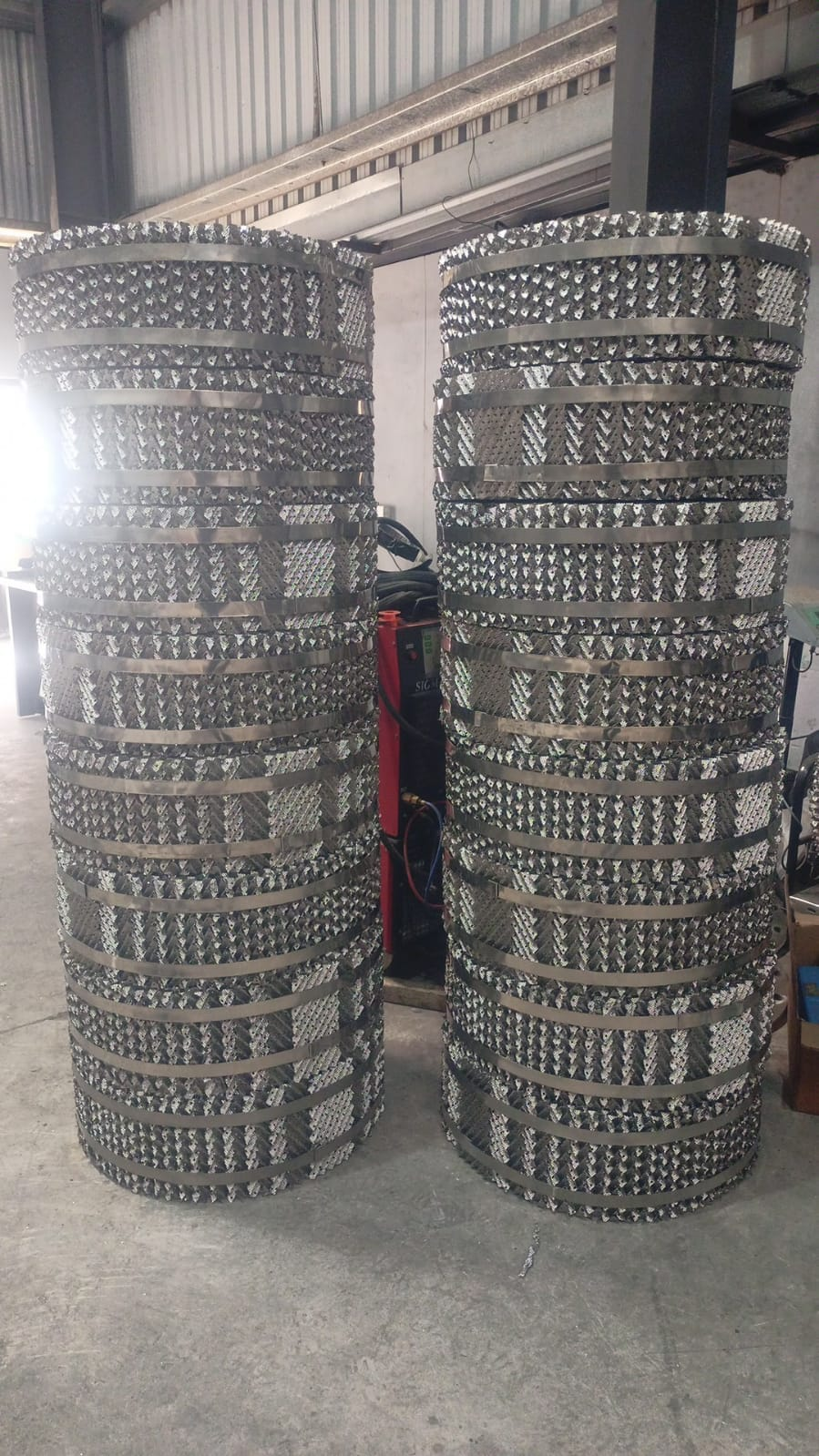
The process operates on the principle of volatilization and mass transfer. When wastewater contacts steam or stripping gas inside a packed or tray column, volatile solvents transfer from the liquid into the gas phase. The solvent-rich vapour is then sent to a condenser and/or vapour recovery system, while the treated wastewater exits from the bottom of the column.
  • High mass-transfer efficiency – Promotes effective contact between liquid wastewater and the stripping medium.
  • Packed bed or tray design – Provides a large contact area for solvent removal.
  • Counter-current operation – Wastewater generally flows downward while steam or stripping gas flows upward.
  • Solvent removal capability – Reduces volatile organic compounds in the treated wastewater.
  • Temperature control – Optimizes stripping efficiency and energy consumption.
  • Pressure control – Supports safe, stable operation at the design pressure.
  • Corrosion-resistant construction – Material selection based on wastewater chemistry and solvent compatibility.
  • Continuous operation – Suitable for industrial wastewater treatment at consistent flow rates.
  • Vapour recovery system – Can include a condenser, receiver and solvent recovery arrangement.
  • Automated monitoring – Flow, temperature, pressure and liquid-level instruments support reliable operation.
  • Maintenance and cleaning access – Manways and suitable internals facilitate inspection and maintenance.
  • Safety provisions – Appropriate vent treatment, pressure protection, grounding and hazardous-area equipment where required.
  • Reduces volatile solvent loading before biological treatment.
  • Can improve downstream treatment performance when solvents inhibit biological activity.
  • May enable solvent recovery and reuse.
  • Supports integration with ETP and ZLD systems.
  • Helps control VOC emissions when combined with a properly designed vapour treatment system.
  •  

Ready to Upgrade Your Wastewater Treatment & Ensure 100% PCB Compliance?

Connect directly with our process engineers for technical site audits, customized system design, or instant product specifications.